How do people actually make money trading meme coins without becoming exit liquidity?
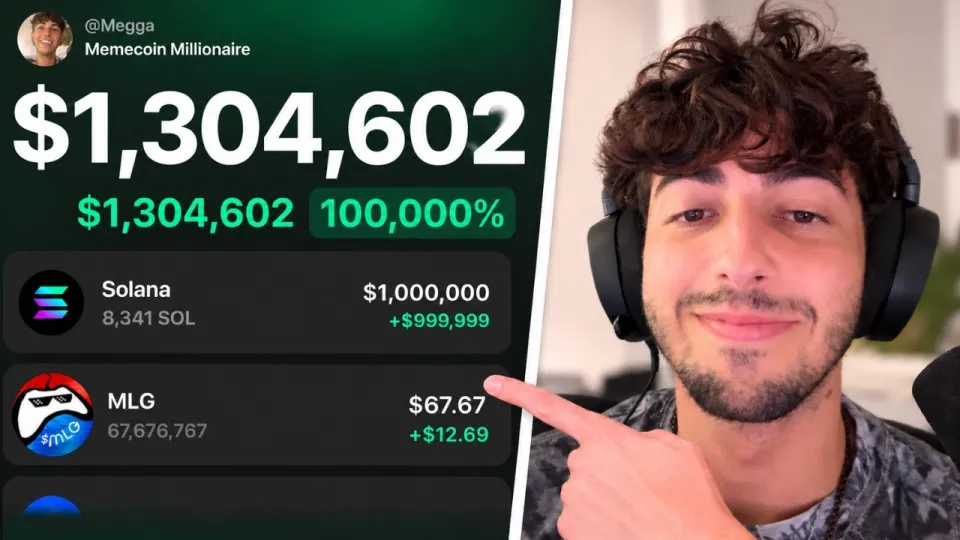
Video: How I Made $1,000,000 Trading Memecoins (FULL BREAKDOWN)
Want articles like this for your own video to promote it on YouTube and Google? Order them through the Telegram bot @sat_sit_bot. It writes articles around your video, embeds the video and publishes them on popular niche websites (no ads). Try it free: 50 articles on us.
· based on the channel Megga
Key takeaways
- Meme coin P&L comes from other buyers, not from the token: every dollar of profit is someone else's entry.
- Megga's breakdown of a $1,000,000 run leans on 9-to-12-hour screen days, early entries and strict position sizing.
- Most retail losses come from buying after the narrative is already on every timeline, then holding through the first red candle.
- The free course linked in the video covers the basics; the trading platform link advertises the lowest fees for on-chain execution.
- Surviving drawdowns matters more than a single 200x: one phishing drain or one oversized bet can erase months of gains.
Meme coin trading is the practice of buying newly launched, community-driven tokens early, selling into the hype of later buyers, and treating every position as a lottery ticket with a defined maximum loss. The money in this niche does not come from the token itself — it comes from other participants who buy after you. Megga, a Fortnite creator turned on-chain trader, published a full breakdown of how that process produced a $1,000,000 result, and the free course he links in the description — get the free meme coin trading course — is the entry point he offers for people starting from zero.
What a meme coin actually is and where the profit comes from
A meme coin is a token with no cash flow, no product and no balance sheet; its price is set purely by attention and liquidity. That single fact explains the whole business model: for one trader to withdraw a million dollars, other traders must have deposited roughly that amount at higher prices. Nothing is created — value is transferred.
This is why the honest framing of the niche is a zero-sum contest over timing and information. The winners are early, size correctly and exit into strength. The losers arrive from a viral post, buy the top of a candle and provide the exit liquidity. Understanding this is not cynicism; it is the minimum required to avoid being the person on the other side of someone else's screenshot.
How Megga describes turning trading into a six-figure result
The breakdown frames the outcome as the product of volume of attempts, not of a single lucky ticket. The recurring elements in the story are time, repetition and emotional control rather than a secret indicator.
- Screen time first. The routine described involves 9 to 12 hours a day in front of charts, feeds and launch trackers — the same grind model as competitive gaming, applied to on-chain markets.
- Many small bets, a few outliers. Most positions go to zero or get cut; the account curve is driven by a handful of tokens that run far beyond the initial entry.
- Early entries only. The edge is being in before the narrative is visible on every timeline, which means reading wallets, launch mechanics and community formation rather than headlines.
- Ruthless exits. Profits are taken in tranches on the way up, and the original stake is removed as soon as possible.
- Drawdown tolerance. The path includes losing streaks, and the material is explicit that being down is part of the process rather than a signal to quit.
Why most buyers end up as exit liquidity
Being exit liquidity means your purchase is the sell order that completes someone else's profit. It happens for structural reasons, not because buyers are stupid.
- Late information. By the time a token appears in your feed with green candles, the earliest wallets are already up multiples and looking for bids.
- No sell plan. Buying without a predefined exit turns a winner into a round trip; the position is held through the first red candle and then through the drawdown.
- Oversizing. A bet large enough to hurt forces panic decisions, and panic selling at the bottom is exactly what the early buyers need.
- Ignoring mechanics. Mint authority, holder concentration, liquidity locks and sniper wallets are checkable before entry; skipping that check is how a "gem" becomes a rug.
- Operational risk. Wallet drains and phishing links wipe accounts independently of trading skill — one careless signature can erase months of gains.
A practical checklist before you buy any meme coin
A repeatable process beats intuition, and the checklist below is the minimum discipline that separates trading from gambling.
- Verify the contract: check mint and freeze authority, holder distribution, and whether liquidity is locked or burned.
- Size the position so a total loss does not change your month — small enough that you can stay rational.
- Define the exit before entry: a target for taking the initial stake out and a level at which you admit the thesis is wrong.
- Track your own numbers: all-time P&L, win rate and average loss tell you more than any single trade.
- Separate wallets: a cold or clean wallet for capital, a burner for interacting with new contracts.
- Log every trade with the reason for entry, so patterns in your own behaviour become visible.
What the audience pushback reveals about the niche
The comments under the breakdown split into two camps, and both are informative. One side is inspired by the honesty about losses, isolation and consistency; the other accuses the format of baiting newcomers into becoming liquidity. Both reactions point at the same truth: the strategy is real, but the base rate for beginners is brutal.
Viewers also raise practical questions that deserve direct answers. How much all-time P&L do you need before networking with other traders? What do you actually do during those long sessions? How do you tell whether a technical narrative will hold? The honest answer to all three is that capital, routine and judgment are built in that order — nobody starts with intuition, and the people posting results spent years acquiring it. If you have a job and cannot watch charts all day, the realistic version of this activity is a small, rules-based allocation rather than a full-time pivot.
Useful links
- Free meme coin trading course — the entry-level material linked in the video description.
- Trading platform with low fees — the execution tool advertised as having the lowest fees.
- Megga on Twitch — live sessions.
- Megga on TikTok — short clips and highlights.
- Megga on X — trade commentary and updates.
The takeaway
The $1,000,000 figure is a real outcome of a repeatable process, but the process is a full-time job built on thousands of attempts, strict sizing and the willingness to lose repeatedly without changing the rules. Meme coin trading rewards speed, information and emotional control, and it punishes anyone who treats a viral post as a signal. The channel Megga is worth following precisely because the breakdown shows the drawdowns alongside the wins. If you want to start, start with the free course from the video description, paper-trade the checklist above, and only risk money whose loss leaves your life unchanged.
Questions & answers
How much money do you need to start trading meme coins?
There is no fixed minimum, but the practical rule is to trade only capital you can lose entirely without affecting your finances. Beginners usually start with small positions precisely because the first months are about learning mechanics and exits, not about maximizing profit. Size every bet so that a total loss does not force you to change your strategy.
Is meme coin trading actually profitable or is it just luck?
Both elements exist, but the repeatable part is process: early entries, small position sizes, defined exits and a high volume of attempts. Luck determines which individual token runs; discipline determines whether the account survives long enough to catch one. Traders who post large results almost always describe years of screen time and many failed positions behind them.
How do I avoid becoming exit liquidity for early buyers?
Check the contract before buying: mint authority, holder concentration, liquidity status and wallet age. Avoid buying tokens that are already up multiples and trending on every feed, and always define your exit before entry. If you cannot explain who will buy from you at a higher price, you are probably that buyer for someone else.
What do the long trading sessions actually consist of?
They are mostly research and monitoring rather than clicking buy buttons: scanning new launches, reading wallets and community activity, tracking narratives, managing open positions and reviewing past trades. The execution takes seconds; the hours go into filtering out the hundreds of tokens that will not run.
Source: How I Made $1,000,000 Trading Memecoins (FULL BREAKDOWN) · Markdown version